

Moisture-Associated Skin Damage (MASD)
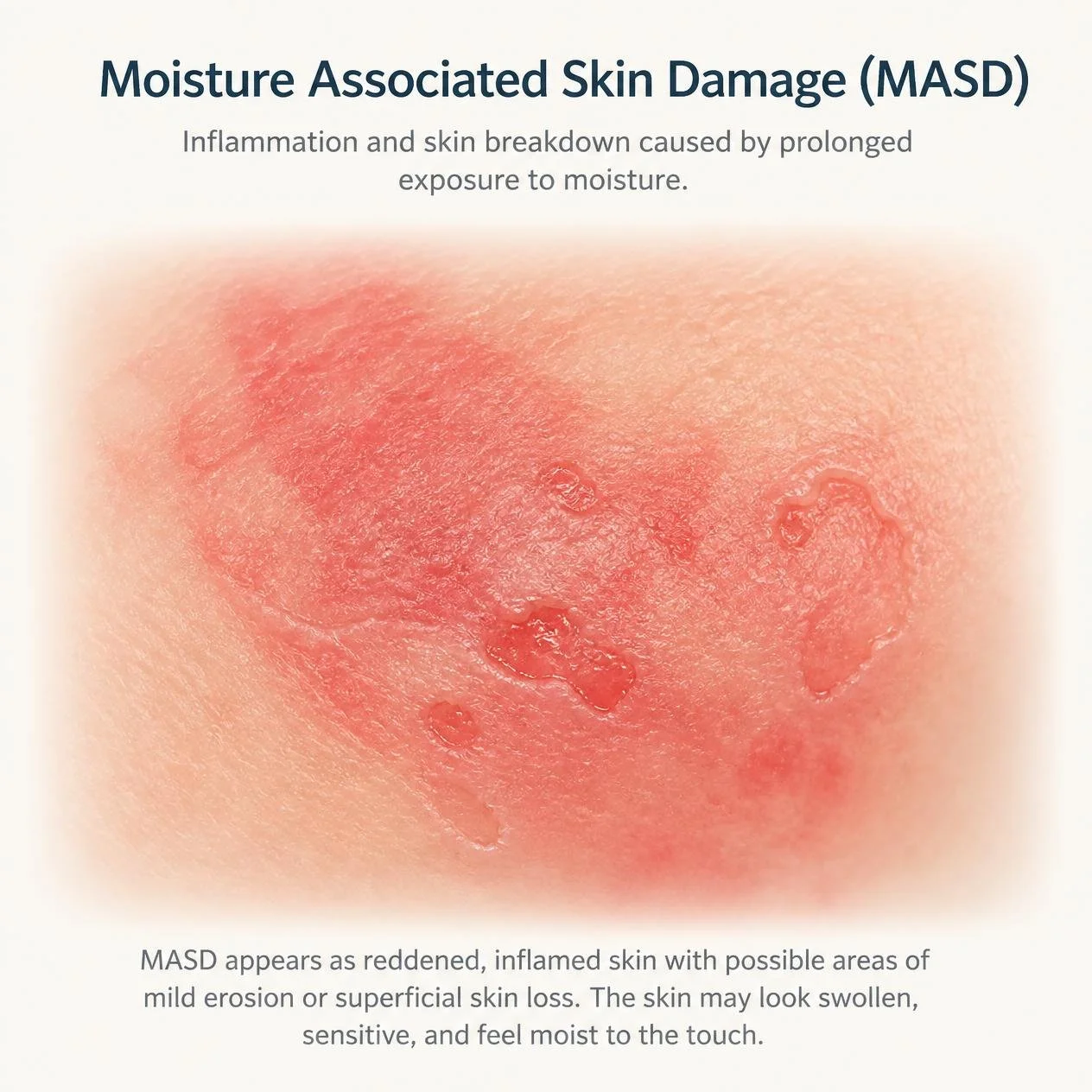
MASD is a spectrum of skin damage caused by prolonged exposure to moisture — most commonly from incontinence, sweat, or wound drainage.
What Is It?
Moisture-Associated Skin Damage (MASD) encompasses several distinct conditions including Incontinence-Associated Dermatitis (IAD), Intertriginous Dermatitis (ITD), and Periwound Moisture-Associated Dermatitis. Each is caused by the prolonged contact of moisture against the skin, leading to inflammation, erosion, and secondary infection risk.
Signs & Symptoms to Look For
Redness, erosion, or denudement of skin in moisture-exposed areas
Skin breakdown in the perineal area, skin folds, or around wounds
Possible satellite lesions suggesting fungal superinfection
Patient reports burning, stinging, or itching
Irregular wound borders distinguishing MASD from pressure injuries
Maceration of skin surrounding existing wounds
Risk Factors
Urinary or fecal incontinence
Immobility or bedbound status
Obesity with prominent skin folds
Diaphoresis (excessive sweating)
High-output wound drainage
Fragile or elderly skin
How Vertex Treats This Wound
Gentle skin cleansing with pH-balanced products
Moisture barrier cream or protective film application
Management of the underlying moisture source where possible
Antifungal treatment if secondary fungal infection is present
Re-evaluation every 30 days or sooner with clinical changes
Clinician and caregiver education on skin protection protocols
The Vertex Approach
MASD is one of the most common skin integrity challenges in the home health patient population. Vertex clinicians identify and treat MASD at the bedside, implement evidence-based skin protection protocols, and coordinate with the care team to address underlying contributing factors.