

Arterial Ulcers
Arterial ulcers develop when inadequate blood flow starves tissue of oxygen, causing painful wounds that resist healing without addressing the underlying vascular disease.
What Is It?
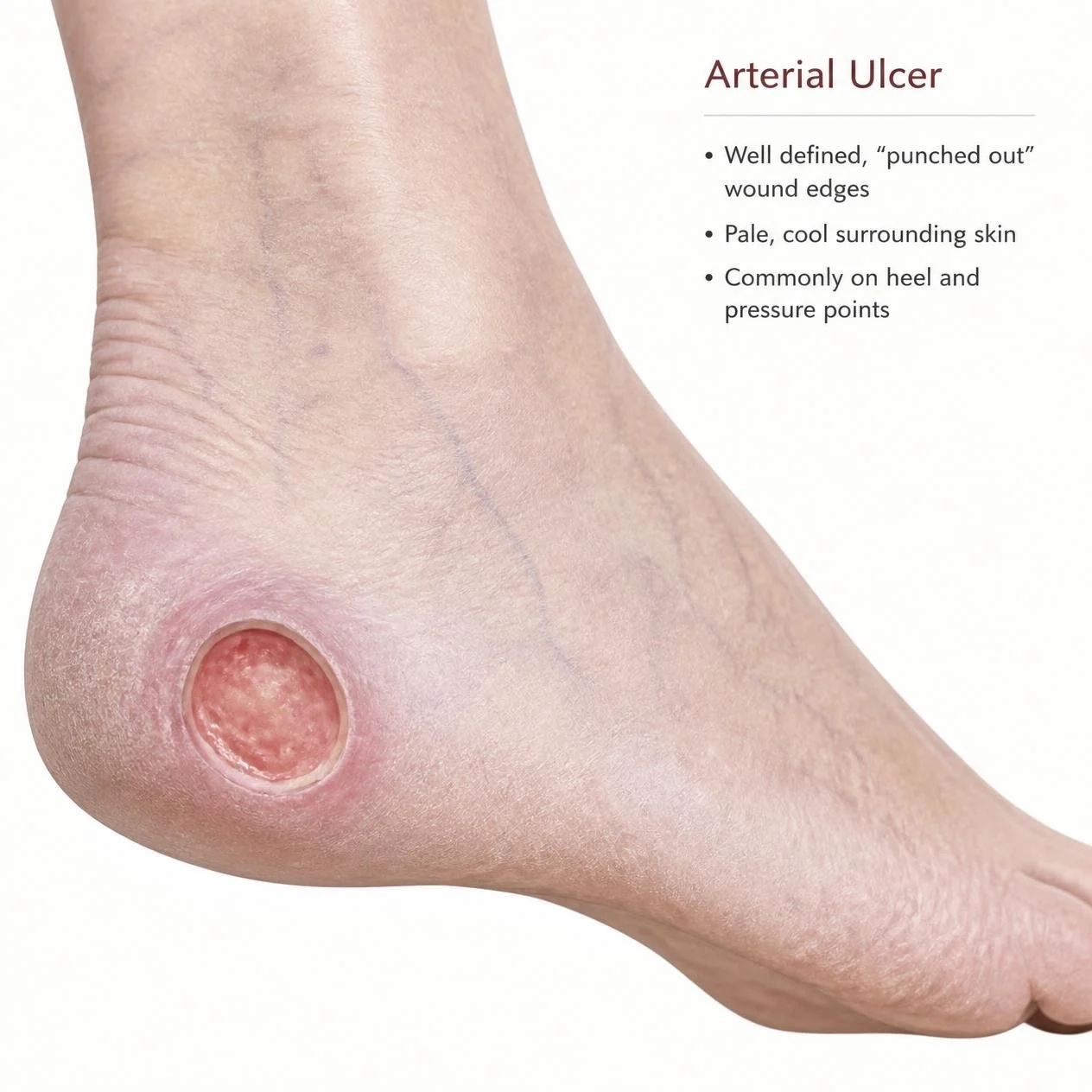
Arterial ulcers result from peripheral arterial disease (PAD) or arteriosclerosis, which narrows and hardens arteries and restricts blood flow to the extremities. Without adequate oxygen, tissue becomes ischemic and breaks down. These wounds are typically very painful, have a punched-out appearance, and are found on the lower leg, ankle, heel, or toes.
Signs & Symptoms to Look For
Well-defined, 'punched out' wound edges
Wound bed appears pale, grey, or necrotic — does not bleed easily
Severe pain, especially at night or when legs are elevated
Cool or cold extremity to the touch
Absent or diminished pedal pulse
Shiny, hairless, dry skin on the lower limb
Risk Factors
Peripheral artery disease (PAD)
Atherosclerosis or arteriosclerosis
Hypertension
Diabetes
Smoking history
Hyperlipidemia
How Vertex Treats This Wound
Gentle wound cleansing and protective dressing application
Assessment for vascular referral — revascularization may be required before healing is possible
Pain management coordination with care team
Avoidance of compression therapy (contraindicated without vascular clearance)
UltraMist therapy post-vascular clearance to support wound bed
Close monitoring for signs of limb-threatening ischemia
The Vertex Approach
Arterial ulcers require careful, experienced clinical assessment in the home. Vertex clinicians identify the vascular component early, facilitate appropriate referrals, and provide evidence-based wound care while the underlying cause is addressed.