

Traumatic & Degloving Wounds
Traumatic wounds and skin loss injuries require careful wound bed management and close monitoring to prevent infection and support progressive healing.
What Is It?
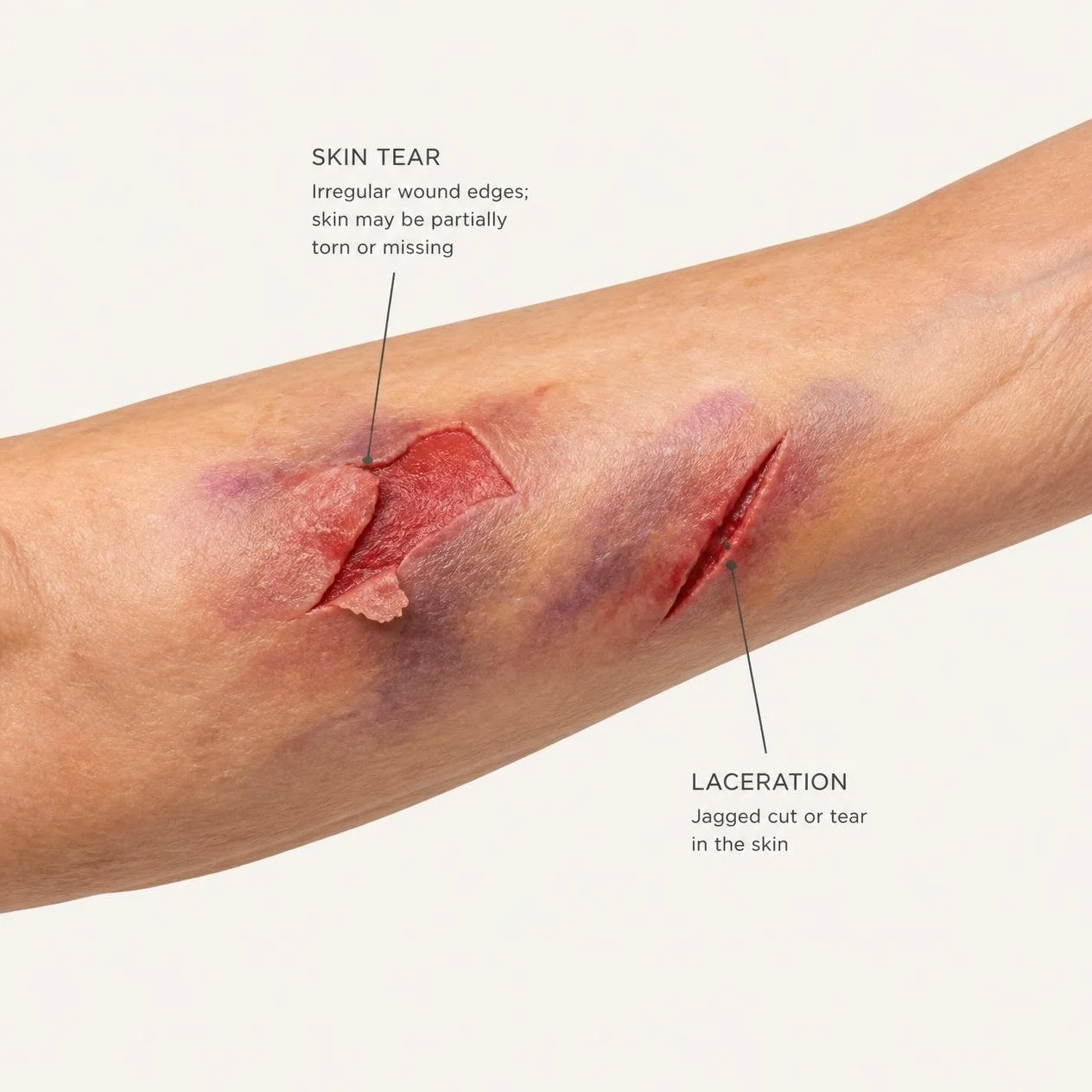
Traumatic wounds include lacerations, abrasions, avulsions, and degloving injuries that have undergone initial emergency treatment and are now being managed during the recovery and healing phase in the home setting. These wounds vary widely in depth, size, and complexity but share the need for consistent, skilled wound care to progress through healing..
Signs & Symptoms to Look For
Open wound resulting from injury, accident, or fall
Skin loss with varying degrees of tissue depth involvement
Irregular wound borders and wound bed
May have foreign body contamination or necrotic tissue present
Surrounding tissue bruising, swelling, or hematoma
Wound that is not progressing as expected following initial treatment
Risk Factors
Elderly patients with fragile or thin skin
Anticoagulant medication use
Diabetes and impaired healing
Immunosuppression
Poor nutritional status
History of falls or recurring trauma
How Vertex Treats This Wound
Wound cleansing, irrigation, and debridement of devitalized tissue
Advanced dressing selection for wound depth and drainage
Monitoring for signs of infection or wound deterioration
UltraMist therapy for stalled or infected traumatic wounds
Communication with primary care and relevant specialists
Caregiver education on wound protection between visits
The Vertex Approach
Traumatic wounds heal best with consistent, expert clinical oversight. Vertex clinicians provide that continuity in the home, ensuring each visit builds on the last and that any deterioration is identified and addressed immediately.