

Radiation-Induced Wounds
Radiation therapy can damage healthy tissue, leading to skin breakdown, chronic wounds, and radiation necrosis that require specialized wound management.
What Is It?
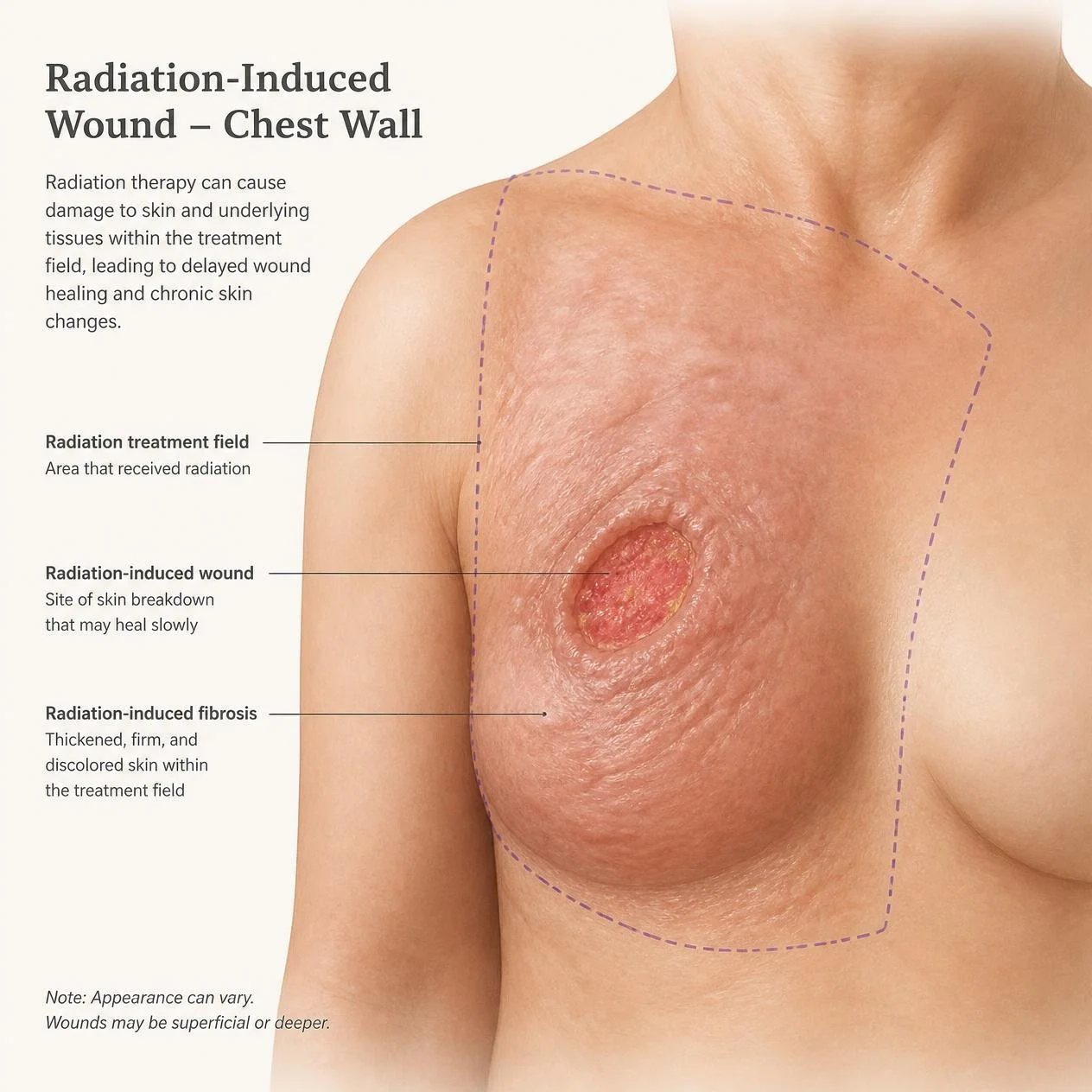
Radiation-induced wounds occur as a delayed consequence of radiation therapy for cancer. Radiation damages blood vessels and impairs tissue regeneration, creating a chronic hypoxic wound environment. These wounds can present months to years after radiation treatment and are particularly challenging to heal due to compromised tissue vascularity and reduced regenerative capacity.
Signs & Symptoms to Look For
Skin breakdown, ulceration, or necrosis in a previously irradiated area
Wound located within a radiation field — often on the chest, neck, pelvis, or extremity
History of cancer treatment with radiation therapy
Poor or absent wound healing despite standard care
Fibrosis and induration of surrounding skin and tissue
Wound may be painless due to radiation-induced neuropathy
Risk Factors
History of radiation therapy — especially high-dose or repeat courses
Head and neck cancers treated with radiotherapy
Breast, pelvic, or extremity radiation fields
Diabetes and vascular disease compounding radiation effects
Malnutrition and immunosuppression from cancer treatment
Skin folds or moist areas within radiation fields
How Vertex Treats This Wound
Gentle wound management with non-traumatic dressings
Wound bed preparation with debridement of non-viable tissue where appropriate
UltraMist therapy to stimulate cellular repair in hypoxic wound environments
Coordination with the oncology team regarding wound status
Monitoring for wound progression or signs of osteoradionecrosis
Patient education on protecting irradiated skin from further trauma
The Vertex Approach
Radiation wounds require a level of clinical expertise that goes beyond standard nursing wound care. Vertex clinicians understand the unique biology of radiation-damaged tissue and provide specialized management in close coordination with the patient's oncology team.