

Pressure Ulcers / Pressure Injuries
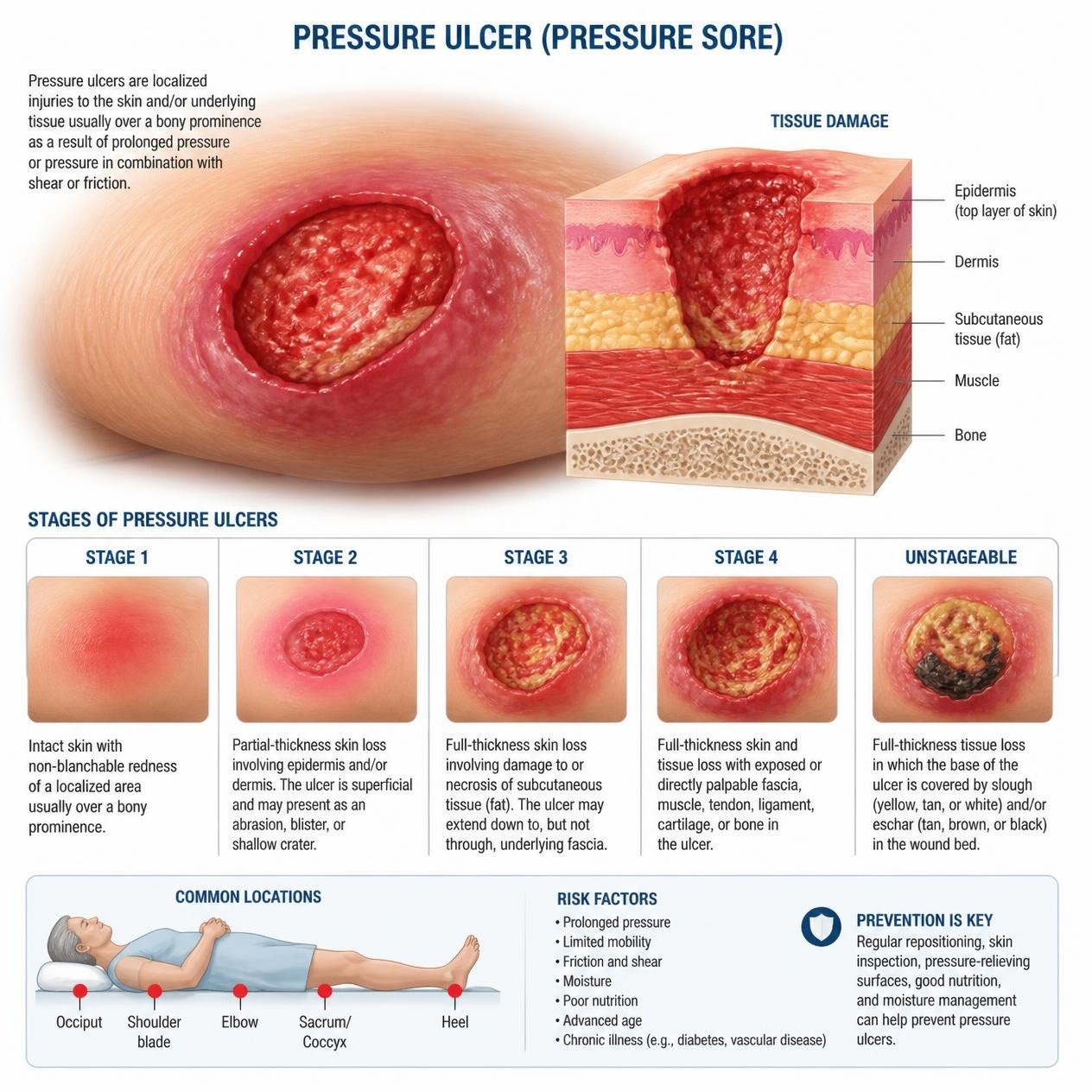
Pressure injuries occur when sustained pressure cuts off blood flow to skin and underlying tissue, most commonly over bony prominences in patients with limited mobility
What Is It?
Pressure injuries develop when prolonged pressure - often combined with friction or shear - reduces blood flow to the skin. Without adequate oxygen and nutrients, tissue begins to break down. They are most common over the sacrum, coccyc, heels, hips, and angles in bed bound or wheelchair-bound patients.
Signs & Symptoms to Look For
Intact skin with non-blanchabe redness (Stage 1)
Shallow open wound or blister with pink-red wound bed (Stage 2)
Full thickness skin loss, visible subcutaneous fat, no more or muscle exposed (Stage 3)
Full thickness loss with exposed bone, tendon, or muscle (Stage 4)
Wound covered by slough or eschar - depth unknown (Unstageable)
Purple or maroon intact skin indicating deep tissue damage (DTI)
Risk Factors
Immobility or bedbound status
Malnutrition and low albumin
Incontinence and moisture exposure
Diabetes and poor circulation
Advanced age and fragile skin
Neurological conditions affecting sensation
How Vertex Treats This Wound
Thorough wound assessment and staging at every visit
Sharp selective debridement of necrotic tissue
Advanced evidence-based dressing selection tailored to wound stage
UltraMist therapy for stalled or complex wounds
Re-evaluation every 30 days or sooner if wound changes
Coordination with case manager and home health team
The Vertex Approach
Vertex clinicians are trained in pressure injury staging, sharp debridement, and advanced wound bed preparation. We work directly in the patient's home to manage complex pressure injuries that require more than standard nursing dressing changes.