

The Science of Healing: Why Specialized Wound Care is Your Best Defense?
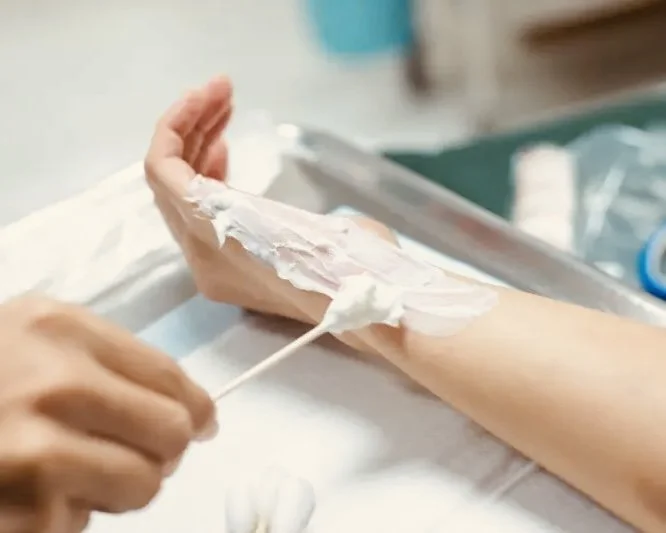
When it comes to your health, time is often the most critical factor especially when a wound isn't healing as it should. While minor scrapes might resolve with a simple bandage, chronic wounds are complex biological puzzles. At Vertex Wound Specialists, we believe that understanding the "why" behind your wound is the first step toward closing it for good.
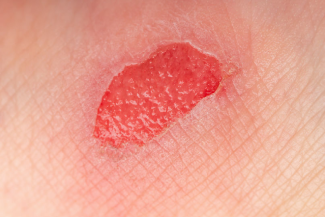
Medical illustrration of a healing wound.
Understanding the "Stalled" Wound
A wound is generally considered "chronic" or complex if it fails to show significant improvement within a standard timeframe, often defined by persistent infection or compromised vascularity (Sadeghi et al., 2024).
In these cases, the body’s natural healing cycle, usually a predictable sequence of inflammation, tissue formation, and remodeling gets "stalled" in the inflammatory phase.
Why do wounds stop healing?
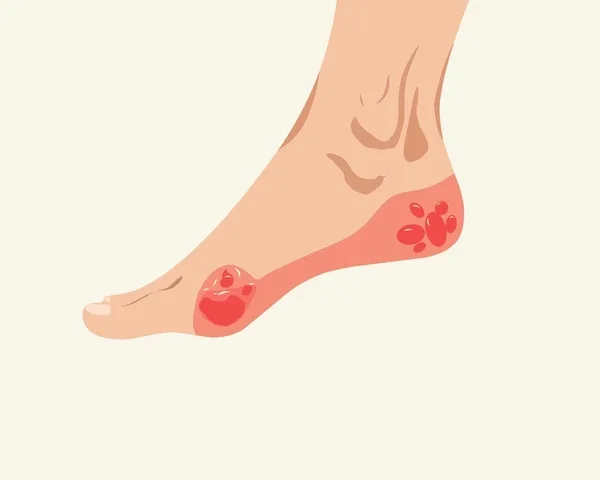
Clipart illustration of delayed wound healing.
• Biofilms & Bacterial Load: All open wounds have bacterial colonization, but when these bacteria form biofilms, they can cause persistent infection and loss of function (Tuma et al., 2023).
• Vascular Deficits: Without adequate blood flow, tissues do not receive the oxygen and nutrients required to rebuild, a common issue in patients with venous insufficiency or hypertension (Sen, 2021).
• Wound Alkalinization: Chronic wounds often have an alkaline pH; specialized treatment aims to acidify the wound bed to a pH between 6.8 and 7.2 to stimulate healing (Sadeghi et al., 2024).
The Vertex Advantage: Beyond the Bandage
General medical care is vital, but specialized wound care is a science of its own. Research indicates that the organization of health services and the use of dedicated multidisciplinary teams can significantly impact outcomes, particularly in reducing major lower extremity amputations for patients with diabetic foot ulcers (Meza-Torres et al., 2021).
At Vertex, we don't just "cover" a wound; we treat the environment using advanced, evidence-based modalities (Sadeghi et al., 2024):
• Precision Debridement: The careful removal of non-viable, necrotic, or "sloughy" tissue that acts as a barrier to new growth (Tuma et al., 2023).
• Moisture Balance: Maintaining an environment that is neither too dry nor too wet is essential for the healing of vascularized wounds (Zayed et al., 2024).
• Advanced Combination Products: Using treatments that simultaneously target inflammation, oxidative stress, and infection to overcome the limitations of standard care (Sadeghi et al., 2024).
Your Path to Recovery
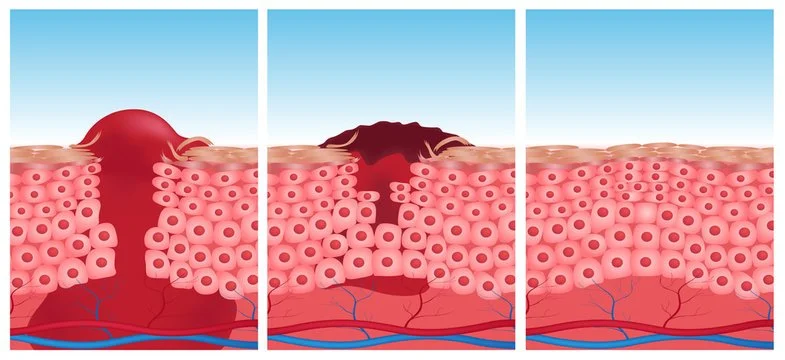
Medical clipart illustration of wound healing.
Healing requires more than just clinical visits; it requires a partnership. To support your journey at home, we recommend:
1. Nutritional Assessment: Your body needs adequate nutrition to knit tissue back together; monitoring your status is a key part of the assessment (Zayed et al., 2024).
2. Managing Comorbidities: Addressing underlying issues like diabetes or obesity is critical, as these factors significantly increase the burden of chronic non-healing wounds (Sen, 2021).
3. Tender Loving Care: Be gentle with your skin. Avoid harsh treatments and follow your specialist's guidance on dressing changes to prevent trauma to the wound bed.
Don’t Wait for "One More Week"
A non-healing wound is a signal from your body that it needs expert intervention. At Vertex Wound Specialists, our mission is to provide the specialized expertise needed to prevent infections and restore your quality of life.
Ready to start your healing journey? Contact us today for a comprehensive evaluation. Let's get you back on your feet, literally.

References
Meza-Torres, B., Carinci, F., Heiss, C., Joy, M., & de Lusignan, S. (2021). Health service organisation impact on lower extremity amputations in people with type 2 diabetes with foot ulcers: Systematic review and meta-analysis. Acta Diabetologica, 58, 735–747. https://doi.org/10.1007/s00592-020-01662-x
Sadeghi, M., Prieto, P., & Santos-Ruiz, L. (2024). Rethinking chronic wound treatment: Unlocking the potential of combination products for an unmet multifactorial need: A review study. Advanced Wound Care. https://doi.org/10.1089/wound.2021.0026
Sen, C. K. (2021). Human wound and its burden: Updated 2020 compendium of estimates. Advances in Wound Care, 10(5), 281–292. https://doi.org/10.1089/wound.2021.0026
Tuma, F., Moore, J. M., & Mansour, T. J. (2023). Wound assessment. StatPearls Publishing. https://www.ncbi.nlm.nih.gov/books/NBK482198/
Zayed, M., Ahmed, A., & Tuma, F. (2024). Complex wound management. StatPearls Publishing. https://www.ncbi.nlm.nih.gov/books/NBK576385/
