

Compression therapy without confusion, how to get it right for venous leg ulcers.
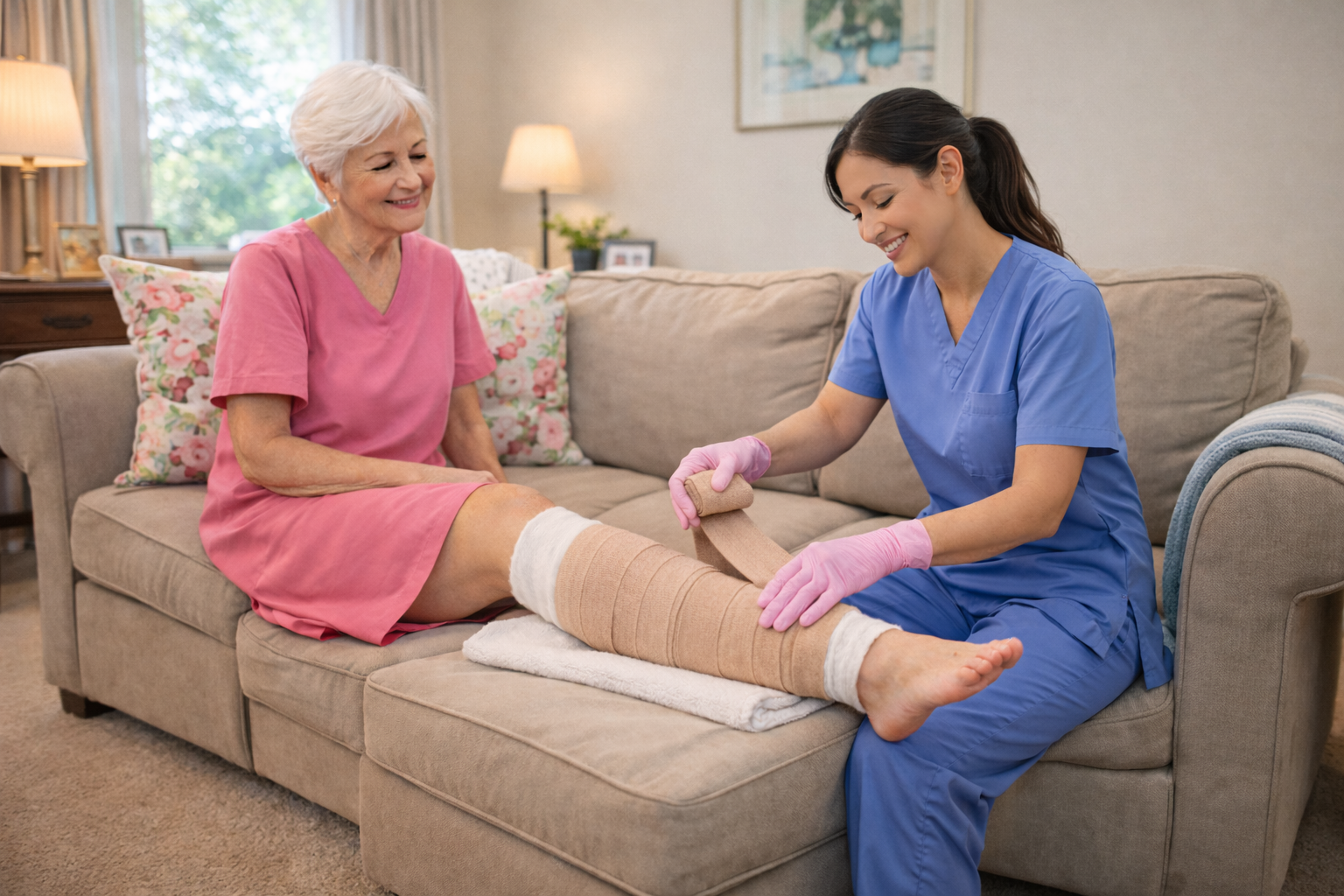
Venous leg ulcers heal when you control edema. Dressings help manage drainage, but compression drives the physiology. If edema stays high, the wound keeps leaking, the skin breaks down, and healing stalls.
This article gives you a practical approach you can use in home health. It focuses on what to do first, what to avoid, and how to improve adherence so compression actually works.
WHY VENOUS LEG ULCERS DO NOT HEAL WITHOUT COMPRESSION
Venous disease increases pressure in the lower leg. Fluid shifts into tissue. The leg swells. Swelling reduces oxygen delivery and increases drainage. Skin becomes fragile. Small openings become chronic wounds.
Compression reduces edema by improving venous return and decreasing fluid leakage. When compression is applied correctly and used consistently, you usually see:
• Less swelling within days
• Lower drainage output
• Better periwound skin integrity
• Faster reduction in wound size
WHAT TO CONFIRM BEFORE YOU COMPRESS
Compression is appropriate for many venous leg ulcers, but you need to screen for arterial risk. If arterial flow is poor, high compression can cause harm.
Before you apply compression, check for red flags:
• New rest pain in the foot, especially at night
• Pain that worsens with elevation and improves with dependent position
• Cool foot, pale or bluish toes
• Delayed cap refill
• Weak or absent pedal pulses compared to baseline
• History of severe PAD, prior bypass, or critical limb ischemia
If ABIs are available, use them. If they are not available, treat symptoms seriously and escalate for vascular evaluation when concern is high.
In home health, your safest move is simple.
If you suspect significant arterial disease, do not guess. Escalate. Use a conservative approach until you have guidance.
CHOOSING THE RIGHT COMPRESSION, KEEP IT SIMPLE
The best compression system is the one the patient can keep on correctly.
Match the system to these factors:
• How much edema is present
• How much drainage the wound produces
• Patient mobility and fall risk
• Patient and caregiver ability to apply and remove the system
• Skin fragility and tolerance
• Visit frequency and ability to monitor changes
Common options and when they tend to work best:
1. Multilayer compression wraps
Good for moderate to heavy edema and venous ulcers that need steady compression.
Best when a clinician applies it and can reapply on schedule.
2. Short-stretch wraps
Often useful when edema is significant and patient activity level is higher, because the wrap provides different pressure with movement.
Best when the clinician has experience applying it correctly.
3. Adjustable compression wraps with Velcro
Strong option when patients or caregivers need to manage compression between visits.
Good for long-term adherence and for patients who struggle with traditional wraps.
4. Compression stockings
Helpful for maintenance and prevention after the ulcer closes.
They can also work during healing for mild edema, but many patients cannot don them independently, and they can fail if fit is wrong.
If you can only remember one rule, use this.
Choose the system the patient can realistically use for the next 2 to 4 weeks without frequent failure.
HOW TO APPLY COMPRESSION CORRECTLY
Most compression failures come from technique. The wrap slides. It bunches. It creates focal pressure. It leaves gaps. The patient removes it because it hurts.
Aim for a smooth, consistent application:
• Start at the base of the toes or just above the foot, based on your protocol and product guidance
• Maintain even overlap and tension
• Avoid wrinkles and ridges
• Protect bony prominences if the patient has fragile skin
• Ensure the wrap does not cut into the ankle or behind the knee
• Confirm the patient can move safely with it on
After application, do a quick safety check:
• Ask about comfort and pain
• Check toe color and warmth
• Confirm sensation changes are not new
• Ensure shoes can still fit safely
COMMON MISTAKES THAT STOP HEALING
These patterns show up often in stalled venous ulcers:
Mistake 1, “light compression” for severe edema
Edema stays high, drainage stays heavy, dressings saturate, and the wound never stabilizes.
Mistake 2, wrap only on visit days
Compression needs consistency. If the patient goes multiple days without it, you lose progress every week.
Mistake 3, the wrap is too loose
A loose wrap slides. Sliding causes friction blisters and new breakdown.
Mistake 4, the wrap is too tight in one spot
Focal pressure causes pain, skin injury, and refusal to keep it on.
Mistake 5, no periwound protection
Heavy drainage macerates skin. Even perfect compression will fail if the periwound stays wet and fragile.
HOW TO IMPROVE ADHERENCE IN THE HOME
Compression fails when the patient cannot tolerate it or does not understand it.
Use a clear education script:
• “This wrap reduces swelling. Less swelling means less drainage and faster healing.”
• “If you take it off every day, the swelling returns and the wound will stall.”
• “Call us the same day if you have new severe pain, numbness, cold toes, or color change.”
Make it easier to succeed:
• Address itch early with skin protection strategies and appropriate moisturization on intact skin, per your protocol
• Use an option the caregiver can manage if the patient cannot
• Re-check fit and technique quickly after the first application, because early discomfort predicts removal
• Set a simple wear schedule and document it in the plan
MONITORING, WHAT SHOULD CHANGE WEEK TO WEEK
Compression is working when you see:
• Decreasing edema measurements or visible reduction in swelling
• Lower drainage output and less dressing saturation
• Improved periwound skin, less maceration and less inflammation
• Gradual wound size reduction
If you do not see progress after 2 to 4 weeks, reassess.
Compression may be insufficient, inconsistent, or applied incorrectly. The wound may also have additional barriers like biofilm, infection, or mixed arterial disease.
WHEN TO ESCALATE RIGHT AWAY
Escalate same-day if any of the following occur after compression is applied:
• New severe pain that does not settle
• Numbness, tingling, or loss of sensation
• Cold toes, pale or blue discoloration
• Rapid swelling increase, especially with shortness of breath or systemic symptoms
• Spreading redness, fever, or concern for infection
COMPRESSION IS A TREATMENT, NOT AN ACCESSORY
A venous leg ulcer plan without consistent compression is usually a stalled plan. When you choose the right system, apply it correctly, and support adherence, healing becomes more predictable.
At Vertex Wound Specialists, we help home health teams build compression plans that work in real homes, with real constraints. We focus on correct technique, patient tolerance, and fast course correction when a wound stalls.
